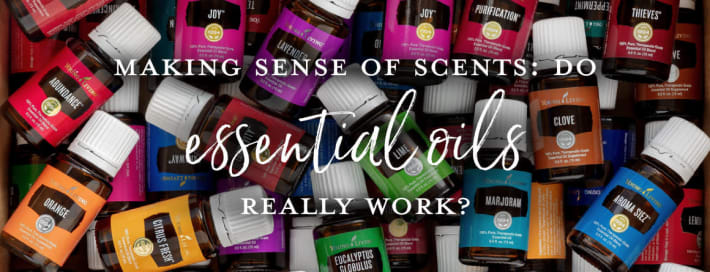
You love how your temples tingle when you wash your hair with Lavender Mint Clarifying shampoo and the minty freshness after brushing your teeth with Thieves AromaBright Toothpaste. Remember that cooling sensation? It’s the constituents in Peppermint telling your body it’s cold no matter the temp outside. And when we say constituents, we’re not talking politics—more on that later.
If you love essential oils and aren’t afraid to let the world know, chances are friends have asked questions like “Are essential oils a hoax?” and “Do essential oils work?” You can answer “no” to the first question and “yes” to the second with confidence. Peppermint is just one example that essential oils have some real power, but that power goes far beyond a frosty feeling during a massage.
You’ve probably heard others talking about how essential oils work for them or experienced them working yourself, but you may not know how or why. Keep reading for all the answers!
Essential oils in ancient civilizations
For centuries, cultures around the world have turned to essential oils in their ongoing quest for wellness. Ancient Egyptians, Romans, Persians, and Germans used essential oils for things like elevating spiritual and religious practices, enhancing beauty routines, adding flavor to foods, and supporting overall wellness. But is there any science to support those benefits? Yes! Grab your virtual lab coat as we get all scientific.
If you want to adapt age-old practices for modern-day use, you need to do some serious research into essential oils. At Young Living’s D. Gary Young Research Institute, Chief Science Officer Mike Buch oversees industry-leading analytical laboratories where scientists test the purity and potency of our oils, as well as dive into research about the effects and benefits of these plant-based powerhouses. The Institute’s research has created an ever-expanding library of substantiated essential oil claims.
Last year the Institute partnered with some of the world’s leading research institutes to conduct over 50 studies to ensure our products do what we claim they do. Throw in a partnership with the Monell Center, where world-renowned scientists research the science of taste and smell, and we’ve got serious research in spades.
Once you understand the science, you can make the most of the oils—and feel confident doing so. Keep reading to learn what makes up an essential oil and how these substances interact with the senses.
Let’s revisit our BFF Peppermint. Its constituents—the components that make up the oil—include things like menthol*, menthone, and menthyl acetate. Our EO BFF wouldn’t act or work like Peppermint without them. The same goes for all essential oils. Each oil has a unique combination of constituents, and every combination lends itself to a different use. Do the math and you’ll quickly discover a crazy amount of benefits.
Constituents have some mad skills, and we love taking advantage of them. We pop cough drops when our throats are sore and apply over-the-counter pain relief creams to overworked muscles. Both products provide a cooling sensation due to menthol, the main constituent in Peppermint.
First constituents and now receptors—we’re getting a little Bill Nye, but we promise it’s worth it. Understanding how essential oils interact with your body is empowering!
Without receptors, you wouldn’t sense those super-cooling powers. Receptors are proteins that specifically bind with different types of molecules to facilitate chemical communication within our bodies. You have millions of receptors on your body, but we want to focus on your sensory and thermoreceptors because they’re the ones involved in touch, taste, and smell.
When compounds in essential oils bind to receptors, they trigger specific effects in our bodies depending on the oil’s constituents and how you’ve applied it—topically, aromatically, or internally.
Of all the senses, essential oils affect your sense of smell the most. In true science-guy style, let’s dive a little deeper and find out if the nose really knows.
According to a study published by the National Center for Biotechnology Information, the sense of smell is one of the first senses humans developed. From the beginning, humans have used their olfactory sense—science’s fancy way of saying the sense of smell—to identify food, potential mating partners, dangers, enemies, and more. For most living creatures, the smell is a key way we interact with our environment.
So how many receptors are dedicated to the olfactory sense? We thought you’d never ask. You’ll find a whopping 100 million or more receptors packed into an area of about 2.5 square centimeters! No wonder essential oils are crazy good at stirring certain emotions or specific memories—you have all those olfactory receptors just waiting to send signals to your brain!
Do essential oils work?
Absolutely—if you’re using them correctly. Essential oils offer a wide variety of uses and benefits; but to get the most out of them, you need to use them correctly. Each oil comes from a unique plant, which means unique constituents and properties, so they all have different uses.
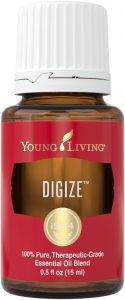
Here are some ways to make the most of the powerful constituents in essential oils:
- Motivation: The aroma of Brain Power™ promotes a focused, stimulating environment.
- Digestion: DiGize Vitality™ cleanses and soothes the digestive system.
- Cleaning: Lemon helps remove adhesives.
- Air purification: The scent of Purification® purifies the air to eliminate odors.
- Relaxation: Diffusing Frankincense promotes feelings of relaxation and tranquility.
- Haircare: Geranium makes hair look radiant and healthy.
- Moisturization: Cedarwood gives skin a youthful-looking glow.
- Blemishes: Tea Tree helps diminish the appearance of blemishes.
- Aging skin: Helichrysum reduces the appearance and texture of uneven skin tone.
- Skin irritation: Lavender cleanses and soothes minor skin irritation.
- Head tension: Peppermint helps soothe occasional head tension when applied to the temples with a massage.
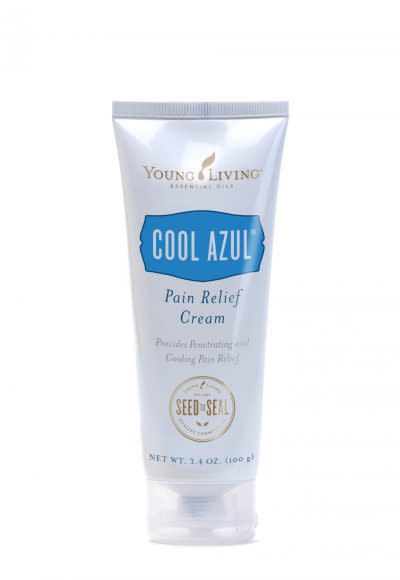
- Massage: Cool Azul soothes tired muscles when used in massage.
Essential oils do all of this and smell amazing. Diffusing oils in your home, office, or car creates amazing aromas to fit virtually any mood. If you like diffusing blends, there are endless recipes and possibilities!
The short answer is yes. Essential oils are safe if you respect these potent products and the plants they come from. They’re powerful tools, and like any tool, be sure to follow label instructions and start slow with any new oil.
Some essential oils may cause photosensitivity if you catch some rays after applying the oils to your skin. Make sure to avoid direct sun exposure for up to 72 hours after using these oils.
Additionally, a few oils are known as “hot” oils, which means they can leave a warming or cooling sensation when applied to your skin that may feel intense. Peppermint is one example of a hot oil; Cinnamon Bark, Black Pepper, and Oregano are others. When using these oils, dilute them with a carrier oil (a good/healthy fatty oil like Young Living's V-6 vegetable oil) before applying them to your skin and watch for a reaction. If no reaction occurs, you’re good to go! Bottom line—Gary Young always said "start low and go slow". Start with small doses and build from there.
Comments 0
Comments are currently closed
Subscribe to My Updates
Here's some information about the list that you're signing up for. It will populate the description from their account.
Free Email Class: Essential Oils 101
Learn all the basics on essential oils in my FREE Essential Oils 101 Email Course. I’ll also share DIY beauty and skin care recipes, homemade cleaners and other practical uses for essential oils to help you save money too.
Ready to begin a healthier life?
Get a Starter Bundle and SAVE!
Most of us begin our journey by choosing a Young Living Starter Bundle. The bundles offer considerable value for your money and they contain enough full-size items to ensure initial success using Young Living.
 Check It Out
For Home, health, & fitness
Products for Everyone!
These products celebrate the harmony between nature, body, mind, and soul. Have you noticed that walking through lavender fields or a pine forest seems to instantly awaken your senses — from the energizing aromas to the feelings of well-being the smell evokes? Young Living infuses this into everything they create.










Next Event Title
This is a description of the event pulled from the user's account, talking about how awesome it is going to be.