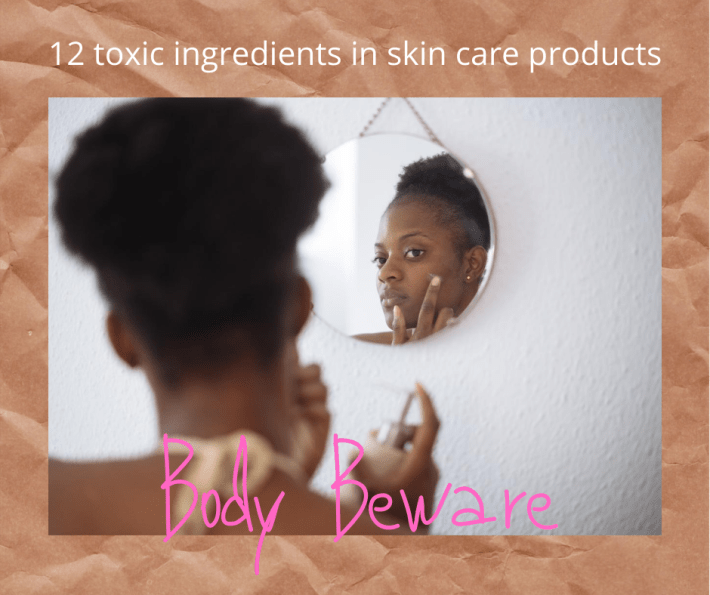
Body Beware: 12 toxic ingredients in skin care products
Did you know that the average woman puts over 300 chemicals on her body first thing in the morning? It’s so important to try and avoid harmful chemicals in our skin and hair products. Chemical products give instant glow to skin. This is because they are highly active chemicals. They can also damage the skin if we use them for a long time. As a consumer, you should be aware of which ingredients in your products are toxic or detrimental in any manner to your health.
Here are 12 toxic ingredients in skin care products:
-
Petroleum and mineral oil
Petroleum jelly, also known as petrolatum, is derived from oil, an unsustainable source. And even the most refined, purest grades of these oils and jellies may still be cause for worry, sometimes containing trace contaminants from the manufacturing process that can penetrate the skin. In fact, the Journal of Women’s Health reported in a 2011 study “strong evidence” exists that “mineral oil hydrocarbons are the greatest contaminant of the human body, amounting to approximately 1 g per person.”
-
Imidazolidinyl Urea
Located in most water-based cosmetics, deodorants, hair dyes, shaving cream, and face masks lurks imidazolidinyl urea in concentrations of 0.1-5 percent. This highly water soluble chemical remains on the skin for hours after being applied through any of the mentioned products, and has sufficient time to be thoroughly absorbed by the dermal cells. It serves as a preservative in conjunction with parabens and releases formaldehyde. Listed in the Environmental Protection Agency (EPA) Toxic Substances Control Act (TSCA) Inventory, imidazolidinyl urea is problematic because it is a known allergen and toxicant in humans. Also, the chemical may be derived from animals and could be a carcinogen. Other formaldehyde releasing chemicals to look out for are DMDM hydantoin, diazolidinyl urea, methenamine, and quarternium-15.
-
Parabens (methylparaben, propylparaben, butylparaben, ethylparaben and other ingredients ending in “paraben”)
As aforementioned, parabens are often used with imidazolidinyl urea, so they are often found in similar products. The FDA states that parabens can be found in, “makeup, moisturizers, hair care products, and shaving products.” Parabens act as a anti-microbial preserving agent in products. Multiple parabens are often used in a single product: the most common are methylparaben, propylparaben, and butylparaben. These chemicals are of concern because they are found in cancer patients, but they are also found in urine samples of U.S. adults without cancer.
Due to their ability to mimic estrogen they can potentially disrupt the endocrine system. According to breastcancer.org, “Parabens can penetrate the skin and act like a very weak estrogen in the body—potentially turning on the growth of hormone-receptor-positive breast cancers.”
Your best bet? Look for products that are labeled “paraben-free.”
-
Undisclosed fragrances and flavors
In order to protect “trade secrets,” cosmetic manufacturers are not required to disclose the ingredients that make up their fragrances and flavors. Unfortunately, synthetic fragrances often contain high levels of phthalates, strong hormone disruptors linked to decreased sperm count in men, reduced female fertility, brain development problems, diabetes, asthma and obesity. Phthalates can also cause allergy and asthma symptoms to worsen. These fragrances can interfere with the immune system and can, as an allergen, instigate an asthma attack. They are potential neurotoxins and can be found in the blood as synthetic musks when frequently used.
Opt for products labeled “phthalate-free” or “free from synthetic fragrance” or those that are “scented with essential oils.”Synthetic fragrances may smell pleasant, but they are not beneficial to the wearer or to the general public.
-
Phthalates
According to the FDA, the following phthalates are most frequently used in cosmetics: dibutylphthalate (DBP), dimethylphthalate (DMP), and diethylphthalate (DEP). Phthalates are used to make plastic or vinyl soft and flexible. It may be shocking to note that the same phthalates that are used in your cosmetics are used in plastic wrap, wood furnishing, lubricants, insecticides, and detergents. Additionally, they are thought to be endocrine disrupters, and animal tests have concluded that phthalates negatively affect hormones and contribute to an early onset of puberty.
-
Polyethylene Glycols
Polyethylene glycols (PEG) is used in various creams as a moisturizer, and they account for a class of ingredients that are petroleum-based. PEGs are known to have low toxicity but their impurities, ethylene oxide and 1,4-dioxane, are not. 1,4-dioxane targets the liver and kidneys when inhaled or absorbed by the body. In animal studies, an antimicrobial cream containing PEGs was put on open wounds, and it caused renal failure among other reactions. All in all, information on PEG toxicity is scarce and contradictory, but they should be avoided to ensure safety.
-
BHA (Butylated Hydroxyanisole) and BHT (Butylated Hydroxytoluene)
These compounds are synthetic antioxidants used as preservatives in lip balms, cosmetics and in a variety of packaged foods. The evidence isn’t conclusive, but they have been linked to respiratory irritation, endocrine disruption, cancer, organ-system toxicity and developmental and reproductive toxicity.
Instead choose products that contain Vitamin E. It does the same job as BHA and BHT, and it’s safe in small doses.
-
Triethanolamine
Triethanolamine (TEA) is a base that changes the pH of the products it is in. Animal tests have shown that this chemical is highly absorptive in nature and can irritate the eyes, skin, and respiratory system. Long-term exposure to TEA has caused asthma and allergic reactions. As determined by the Cosmetic Ingredient Review Assessments, it qualifies as a clear skin toxicant, and is only reasonably safe in cosmetics when restricted.
-
Synthetic colors and dyes
Food, drugs and cosmetics (“FD&C”) color pigments are the most common synthetic colors used in hair dyes and cosmetics (including many lipsticks, lip balms and body lotions). Derived from coal tar (another petroleum byproduct), FD&C color pigments contain heavy metal salts that deposit toxins onto the skin, sometimes causing skin sensitivity and irritation. Some coal tar dyes have also been shown to be carcinogenic—something you definitely want to be aware of before coating your lips or skin with them!
The safety of adding these colors is debatable. The FDA, however, has allowed for seven dyes to be added to products in the United States despite the questionable safety of doing so. Those against the use of such colors state that they are toxic and carcinogenic and possible contributors to hyperactivity or ADHD.
Watch out for FD&C colorants in skin care products (as well as in your foods and beverages).
-
Sodium Lauryl Sulfate
Acting as a detergent in cosmetics, sodium lauryl sulfate, SLS, can produce allergic reactions, drying of the skin, and irritation. The chemical assists in the removal of dirt and oil from the skin and can have a lasting effect on the epidermis of the skin by damaging the hair follicles. SLS was thought to be carcinogenic, but this is an unsubstantiated fallacy; however, it is true that SLS is an irritant as stated above.
-
Stearalkonium Chloride
As an antistatic, preservative, and surfactant, stearalkonium chloride has a variety of uses. The chemical is a suspected environmental toxin and allergen and toxicant. It is found in hair conditioner to control frizz and also in creams, but it is best to avoid stearalkonium chloride because of its allergenic properties.
-
PVP/VA Copolymer
Functioning as a binder or fixer in cosmetics (mostly hair, nail, and skin care products), PVP/VA copolymer is a synthetic vinyl polymer. The copolymer can hinder optimal respiration in sensitive individuals, and is sometimes considered a toxic substance. Additionally, the chemical has been found to be a skin irritant.
Starter Kits will help you start your healthy lifestyle:
https://essenty.com/nancykramer/what-is-a-starter-kit?p=676
Body care products: https://essenty.com/nancykramer/products?category=1712
Our toxin-free cosmetics: https://essenty.com/nancykramer/products?category=787
Our new Bloom facial care products: https://essenty.com/nancykramer/products?category=2277
ART skin care system: https://essenty.com/nancykramer/products?category=1703
Protect your children and babies with these products: https://essenty.com/nancykramer/products?category=894
~~~~~~~~~~~~~~~~~~~~~~~~~~~~~~~~~~~~~~~~~~~~~~~~~~
Some of my Resources:
https://thechalkboardmag.com/toxic-timeout-fdc-color-pigments
https://www.huffpost.com/entry/dangerous-beauty-products_b_4168587
https://www.ams.usda.gov/sites/default/files/media/OrganicCosmeticsFactSheet.pdf
https://www.collective-evolution.com/2012/04/10/you-have-the-right-to-know-17-chemicals-to-avoid-in-cosmetic-and-personal-care-products/
https://www.huffpost.com/entry/vaseline-petroleum-jelly_n_4136226
http://www.safecosmetics.org/get-the-facts/chemicals-of-concern/butylated-compounds/
https://www.breastcancer.org/risk/factors/cosmetics
Comments 0
Leave a comment / questionLeave a Comment / Ask a Question
Subscribe to My Updates
Here's some information about the list that you're signing up for. It will populate the description from their account.
Free Email Class: Essential Oils 101
Learn all the basics on essential oils in my FREE Essential Oils 101 Email Course. I’ll also share DIY beauty and skin care recipes, homemade cleaners and other practical uses for essential oils to help you save money too.
Ready to begin a healthier life?
Get a Starter Bundle and SAVE!
Most of us begin our journey by choosing a Young Living Starter Bundle. The bundles offer considerable value for your money and they contain enough full-size items to ensure initial success using Young Living.
 Check It Out
For Home, health, & fitness
Products for Everyone!
These products celebrate the harmony between nature, body, mind, and soul. Have you noticed that walking through lavender fields or a pine forest seems to instantly awaken your senses — from the energizing aromas to the feelings of well-being the smell evokes? Young Living infuses this into everything they create.








Next Event Title
This is a description of the event pulled from the user's account, talking about how awesome it is going to be.